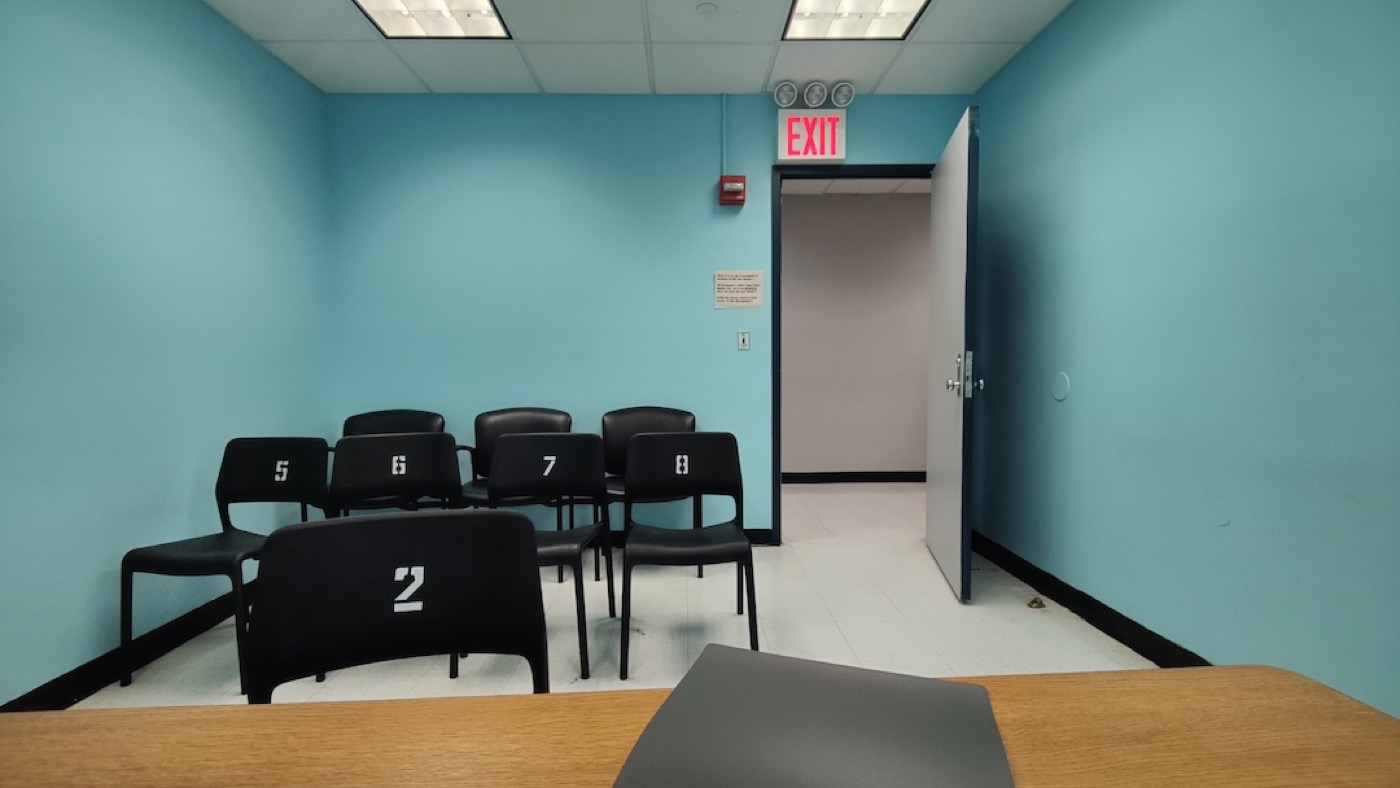
I’m in a spacious, brown, municipal elevator at 6:15 on a Thursday evening. Plenty of people are in there with me, all going to the third floor. It’s time for small claims night court in Brooklyn. Banter between the strangers in the elevator leads to a wry comment, “No one volunteers to be here…” “Actually,” I say. “I volunteer to be here. I’m a mediator.” People look at me in disbelief and laugh with nervous pity. But I love it here. The environment is upsettingly unassuming for people looking forward to having their “day in court.” When a new mediator I was mentoring came the first time, she was aghast. “I feel like I’m at the DMV!” I’m sure I would not like it if I were bringing a case to court or being sued myself, but as a way to witness humanity, get an old-school dopamine hit for engaging in civic duty, and test my skills for being with people when things are not going well for them, nothing beats it.
I want to share the two most surprising observations I have about conflict from mediating dozens of cases over the past two and a half years. First, let me explain a bit about what court mediation is and the common misconceptions I hear about it.
Anyone, for any reason
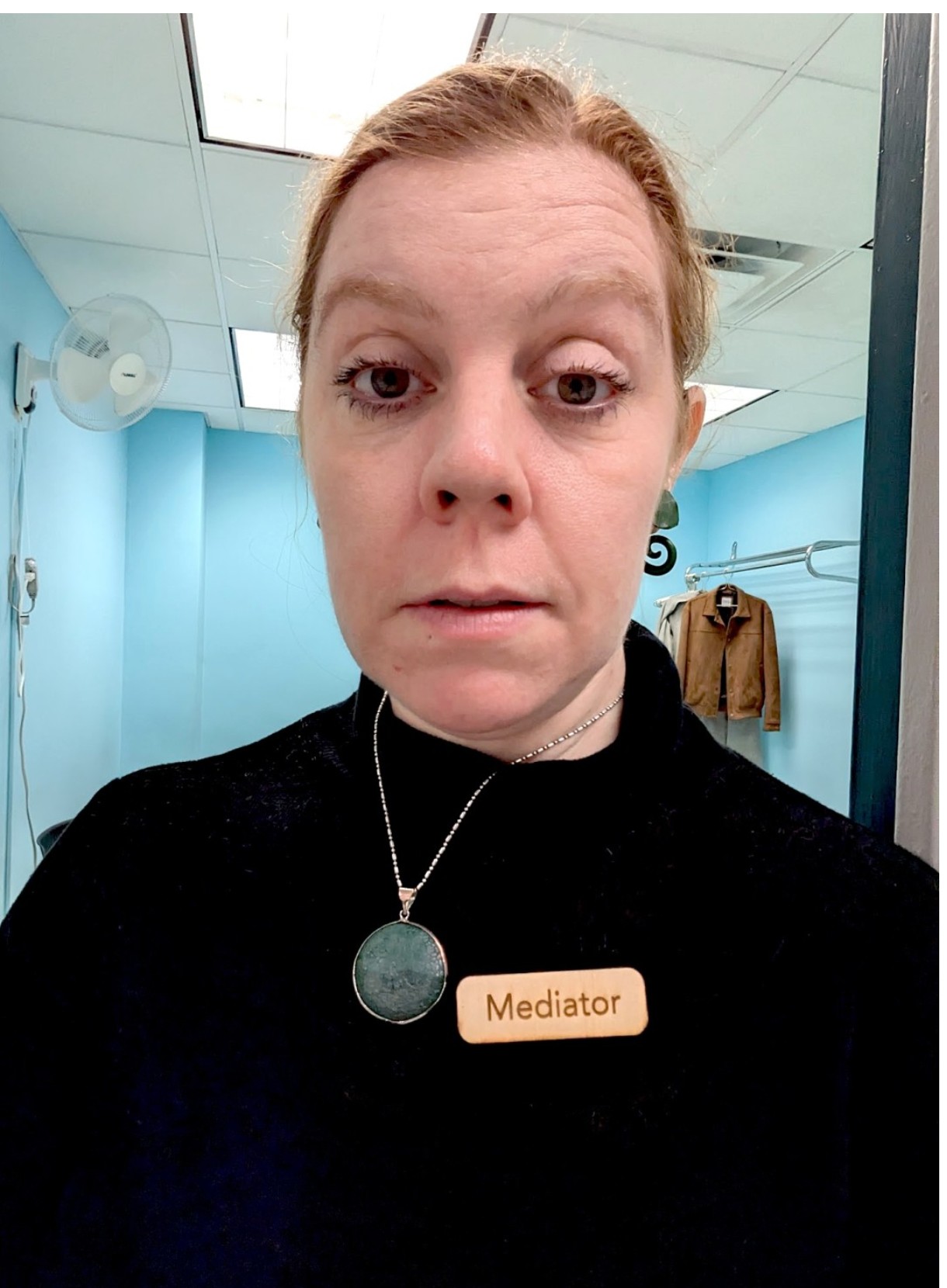
I mediate for the New York Peace Institute, which handles court related mediations in Manhattan and Brooklyn. Small claims court is for people suing each other for $10k or less, and mediators are on hand if people want to try to come to a resolution on their own, rather than having a judge deciding the outcome for them.
In practice, this looks like faffing around clinically lit institutional hallways along with court officers answering questions of irritated or confused people until someone decides mediation sounds like a good idea. Then, we sit down and help them talk to each other for up to an hour. If an agreement is reached, we write that up and the judge rubber stamps it. If they don’t come to an agreement, they get a new date to come back to court to see a judge.
One common misconception about court is that certain kinds of people end up there. From what I’ve seen in small claims, where I spend most of my mediation time, there is no certain type of person. You get all types. Small businesses, big businesses, competent lawyers, novice lawyers, shady lawyers, neighbors, family members, total strangers, longtime friends, business partners, clients and customers, young and old, over-educated and somewhat literate, long-time residents and fresh-faced immigrants.
A common misconception about mediation is that it’s like solving a puzzle. There is no puzzle, and even if there was it wouldn’t be the mediator’s to solve. There is just a relationship of some sort between at least two people, lots of feelings, and some financial component that’s grounding it all. It’s not about discovering what happened or why, what’s right or what should happen. It’s just about being with people as they have all sorts of trouble and big feelings about people in their life and the money that’s involved in that.
The Two Observations: Who’s right, and who to listen to
Observation 1: No one seems right
As much as you may feel right whenever you are in conflict, and that your position is incredibly reasonable and justified, from the perspective of the mediator listening to both parties together, it is incredibly rare for anyone to feel right. I cannot think of a single time where it seemed even subtly apparent that one party was clearly wrong or at fault and the other was obviously right. The law treats this in a more black and white fashion, but from the purely human relations perspective, it’s not even grey. It’s some other color spectrum entirely. Technicolor? Iridescent? Ultraviolet? This is a profound thing to witness because it is so divergent from the lived experience of being in conflict. We have all felt the inherent justness and supremacy of our own perspective and needs when facing off with someone else. I hear parties declare with utter confidence that if they go before the judge, the judge will clearly side with them. And I always look at these people with patient, wide-eyed bafflement and hopefully a little bit of compassion.
Observation 2: Doubling down when we want to be heard backfires
Doubling down on your own perspectives and needs when in conflict only amplifies the sense of not being heard, both for yourself and for the others you’re in conflict with. This feels counterintuitive. If you don’t feel heard, the inclination is to repeat and amplify what you’re thinking and feeling, hoping that it gets through to the other person. The opposite is true. You alienate and anger the other party and feel increasingly disillusioned about not being heard and understood. The conflict tends to worsen from there. This is the role of the mediator in many cases: to create space to hear and explore what’s happening where neither party has the capacity to do that for each other anymore. Countering the reflex to amplify your own story when in conflict yourself is very hard. As much as I have witnessed it, when I am in my own conflicts, I can feel my psyche snap shut on my own story, shouting it to myself inside my head and sometimes outside my head to those around me. Whatever’s going on is very human and really hard to resist when we feel wronged.
Agreements matter but are not the point
Plenty of parties don’t come to a resolution in mediation. The goal of mediation is not a resolution. The goal is simply to create space to explore the issue and see if a resolution might be reachable.
Sometimes parties walk out frustrated either with the process or with each other or with their situation, and simply opt to see the judge. I’ve been in mediations where parties get extremely close to an agreement and things fall apart on a matter of a handful of dollars or the details of how to make payments. I’ve also seen parties walk out hand-in-hand, buoyant with relief and clarity, exchanging payments on the spot. I’ve seen parties reach an agreement, and feel mournfully deflated because there’s nothing left to fight anymore, only the sadness for having been in conflict.
The only thing I feel bad about is seeing parties who don’t settle walk out with a new court date very far into the future. “Thanks for coming to court in April. You can come back again in December!” Yikes… The system is so backed up.
Personal implications
All of this has had a profound impact on me personally.
The reflex to clamp down on my own story and justifications when I am in conflict still triggers, like an unstoppable chemical reaction in a sixth grade science class experiment. Sometimes when I feel it happening, I can step out of the reaction into that observant sixth grader’s eyes and think to myself, “Oh right, this is what I see parties doing in court. This must mean that I’m hurt, that I feel vulnerable, that something important to me is at stake, and that this is not going well. And even if I feel right, I probably am not.” While the chemical reaction of self-reflexive self-involvement still triggers, there’s a small space in my mind to watch it and know that I have other options for how to engage.
After doing so many mediations, I have a lot more courage and poise entering into client situations where there’s an awful lot going on that I can’t possibly understand fully. I see more options for how to be helpful without trying to understand the puzzle or put the pieces together for them.
I have a lot better questions to ask of friends and loved ones who confide in me about the conflicts that they are in. Big emotions are less scary. If anything, they’re really helpful.
The only concrete advice I have is to please, dear God, have renter’s insurance.
(Everything here is my own personal opinion, not endorsed or shared by any organization mentioned.)